
Technology
Kernza perennial grain research project concludes, laying the groundwork for the crop’s next phase
By Jake Thompson
Advertisement · Why this ad?
With a Bachelor's degree in Sociology from Minnesota State University Moorhead, Ethan has spent the last 4 years covering family-oriented issues and educational programs in the region. He has previously written for local parenting magazines and understands the challenges families face.
More from Ethan →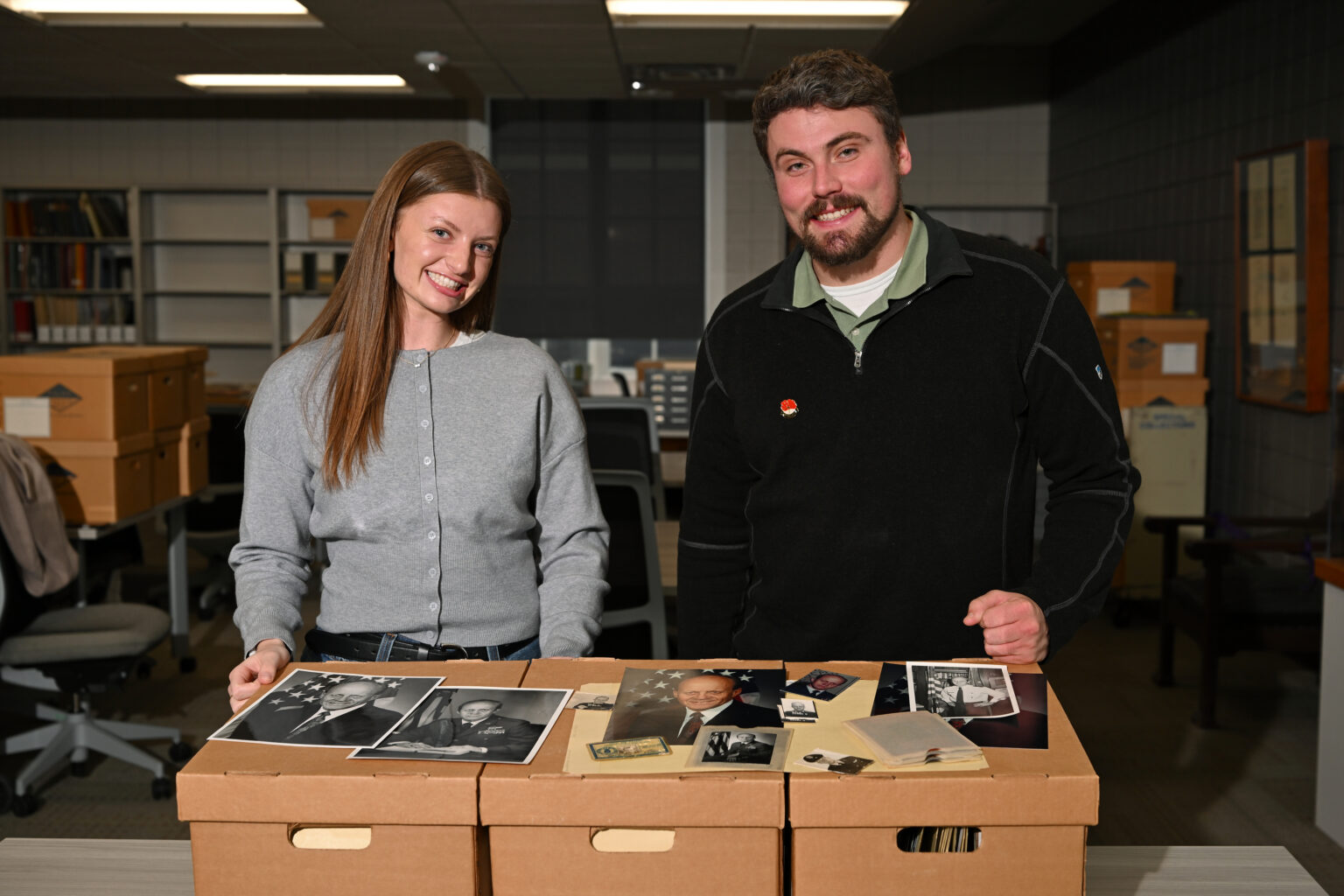
The quiet hum of a scanner, the rustle of aged paper – these are the sounds of hope echoing through the Chester Fritz Library at the University of North Dakota. It’s a scene where history meets technology, where the dedication of two young veterans is breathing new life into decades-old records, all in pursuit of a profound and deeply personal goal: bringing closure to families still searching for loved ones lost in past conflicts. Bella Hammer and Trevor Taylor, both students at UND and with deep ties to the military community, are lending their skills to a project that could potentially unlock answers for families grappling with the enduring pain of loss, a pain that resonates deeply within our West Fargo community.
Bella Hammer, a social work student and member of the North Dakota Air National Guard, and Trevor Taylor, a former combat medic in the U.S. Army now studying commercial aviation, have been instrumental in digitizing a collection of records belonging to the late James Wold. These records, housed at UND’s Chester Fritz Library since 2007, span from 1943 to 2003, the year of Wold’s death. The digitization effort was undertaken at the request of Tours of Duty, a nonprofit organization dedicated to assisting veterans and families seeking information about missing service members. The goal is to make these records accessible to investigators searching for clues related to the Korean and Vietnam wars. According to Mike Luehring, who works with Tours of Duty, “In our world, data is gold,” and these papers represent a valuable resource in their ongoing efforts.
James Wold’s career was defined by service. He enlisted in the U.S. Air Force in 1951, commanded units in Vietnam, and later served as the deputy assistant secretary of defense for POW/MIA Affairs from 1994 onwards. In this role, he worked tirelessly to account for Americans missing from the Korean and Vietnam wars. The digitized collection includes detailed information about service members whose remains were never recovered, a stark reminder of the sacrifices made and the enduring questions that linger. Curt Hanson, who works with special collections at the Chester Fritz Library, notes that “The collection is all the documents he had from that time. It’s unlike any other collection we have.”
The sheer volume of material is significant: 6,400 pages were scanned by Hammer and Taylor, a testament to the breadth and depth of Wold’s work. Taylor focused primarily on Wold’s personal journals and correspondence with Vietnam military officials, while Hammer scanned more professional documents, including maps and invitations from dignitaries. The digitization process wasn’t simply about scanning; it was about connecting with the stories behind the documents, a connection that resonated deeply with both students. The U.S. Department of Defense estimates that over 80,000 service personnel are still missing from previous conflicts, with approximately 38,000 believed to be recoverable – a sobering statistic that underscores the urgency of this archival work. U.S. Department of Defense provides regular updates on these efforts.
Taylor’s reflections on the experience highlight a poignant understanding of the sacrifices made by those who served in Vietnam. He noted that “We left a lot of people behind, and a lot of people wanted to clean their hands of the conflict.” He also speculated, “I imagine Gen. Wold talking to his former enemies in a combined effort to bring home our fallen service members. They deserve respect no matter what side they were on.” This perspective underscores the importance of honoring the service of all veterans, regardless of the era in which they served, and acknowledging the societal challenges faced by those returning from conflict. The act of digitizing these records becomes a symbolic act of remembrance, a way to ensure that their stories are not forgotten and that their sacrifices are not in vain.
Bella Hammer’s involvement in the project is particularly meaningful given her role as a member of the North Dakota Air National Guard and her work supporting military-affiliated students at UND. She expressed her honor in being asked to participate, stating, “It was such a rewarding and unique opportunity. I’m so honored to have been asked.” Her commitment to serving veterans extends beyond this project, demonstrating a deep sense of responsibility and compassion.
The involvement of Hammer and Taylor, both deeply connected to the military community at UND, speaks volumes about the commitment of younger generations to honoring those who served before them. Mike Luehring of Tours of Duty emphasized the importance of this generational connection, stating, “We emphasize this idea that no person can be left behind. When we have young veterans and service members participating in our work, we know they’re experiencing that message.” This sentiment reflects a broader desire within our community to support veterans and their families, particularly those who have endured the long shadow of war. The project has been met with gratitude from Tours of Duty, which sees the digitization effort as a crucial step in its mission to provide answers and closure to grieving families.
While it’s currently uncertain whether the Wold Papers will directly lead to new discoveries, the digitization effort represents a significant step forward in the ongoing search for missing service members. Tours of Duty utilizes artificial intelligence tools to analyze the digitized records, but investigators still rely on in-person interviews and meticulous study of archival materials to generate leads. Luehring explained, “In our world, data is gold,” highlighting the potential for these records to unlock new information. The project also serves as a model for other institutions seeking to leverage student talent and technology to preserve historical records and support veteran-related initiatives.
For families seeking information about missing service members, several resources are available. Tours of Duty (toursofduty.org) provides support and assistance to families seeking answers about their missing loved ones. The U.S. Department of Defense’s POW/MIA Accounting Agency (U.S. Department of Defense POW/MIA Accounting Agency) is responsible for the identification and recovery of missing personnel. The National Archives and Records Administration (archives.gov) holds a vast collection of military records that may contain valuable information. Local veteran support organizations, such as the West Fargo Veterans Association (West Fargo Veterans Association), can also provide assistance and connect families with resources. The University of North Dakota’s Veteran & Military Services (University of North Dakota Veteran & Military Services) offers support and resources for military-affiliated students, demonstrating the university’s commitment to serving the veteran community. The Chester Fritz Library (library.und.edu) continues to preserve and provide access to valuable historical collections, ensuring that these stories are not forgotten. The Fargo-Moorhead Area Chamber of Commerce (fargomoorhead.org) also supports local veterans through various programs and initiatives.
The work of Bella Hammer and Trevor Taylor serves as an inspiration for all of us, reminding us that even in a world facing complex challenges, acts of kindness, compassion, and unwavering dedication can make a profound difference. It’s a story that deserves to be shared and celebrated, a testament to the enduring spirit of service and the power of community.
By Jake Thompson
By Jake Thompson

By Lila Johnson

By Maya Patel